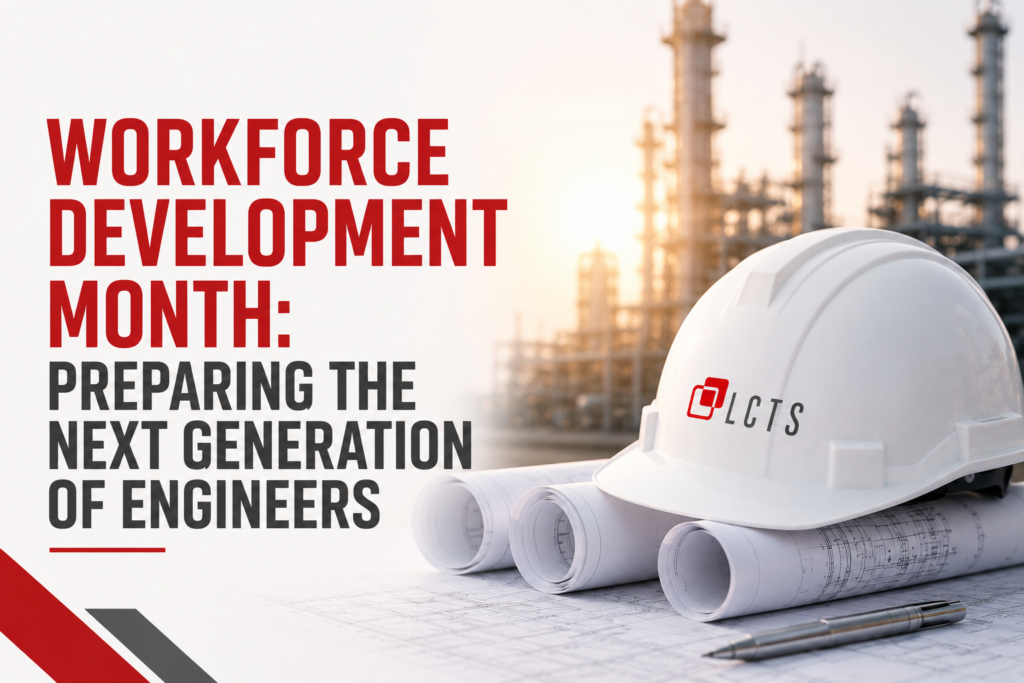
June marks Workforce Development Month, a reminder that the future of industrial operations depends not just on technology, but on people.
For many refineries, petrochemical plants, and industrial facilities, experience and institutional knowledge are as critical as equipment or process technology. With an aging workforce and the retirement of seasoned engineers, the industry faces a growing challenge: how to transfer knowledge and train the next generation to operate safely, efficiently, and confidently.
The Importance of Knowledge Transfer
Knowledge transfer is more than documentation. It’s the hands-on sharing of operational insights, lessons learned, and nuanced decision-making that only experience can provide.
Without structured mentorship, younger engineers may face steep learning curves, operational missteps, or gaps in understanding critical system behaviors.
Programs that promote shadowing, guided training, and collaborative problem-solving help ensure that expertise is retained and passed on.
Mentoring Programs Build Confidence and Competence
Mentoring is one of the most effective ways to bridge the gap between experience and emerging talent.
Through mentoring, junior engineers gain:
• Context for operational decisions
• Understanding of real-world constraints
• Practical skills for troubleshooting and optimization
• Confidence in their ability to make informed decisions
Meanwhile, senior engineers have the opportunity to codify best practices, identify process risks, and ensure continuity in operational knowledge.
TREAT Evaluations and Operational Readiness
Targeted reviews such as TREAT (Technical Review, Engineering Assessment, and Threat Mitigation) are ideal tools to support workforce development.
By including newer engineers in TREAT evaluations, companies can:
• Expose them to real-world risk assessment
• Teach them how to evaluate system performance
• Provide context on how design decisions impact operations
• Build decision-making skills that go beyond textbooks
Operational readiness initiatives also allow engineers to engage with systems hands-on before full-scale operations, reinforcing both technical understanding and practical confidence.
The Business Value of Investing in Talent
Developing the next generation of engineers is not just about filling positions—it is about future-proofing operations.
Facilities with strong knowledge transfer and mentoring programs tend to:
• Reduce operational errors and unplanned downtime
• Improve process efficiency
• Enhance safety and compliance performance
• Maintain operational continuity during workforce transitions
Final Thought
Workforce Development Month is a reminder that people are the most critical asset in industrial operations.
By investing in mentoring, knowledge transfer, and operational readiness, companies can ensure that experience is retained and passed on—building a resilient, capable, and confident next generation of engineers.
The future of industrial operations depends on it.
📨 Got questions? Message us on LinkedIn—we’re ready to help.
📌 Contact us:
📞 +1 (281) 366-1306 | +1 (713) 302-7805
📧 elucke@luckeconsulting.com | sspears@luckeconsulting.com
🌐 www.luckeconsulting.com